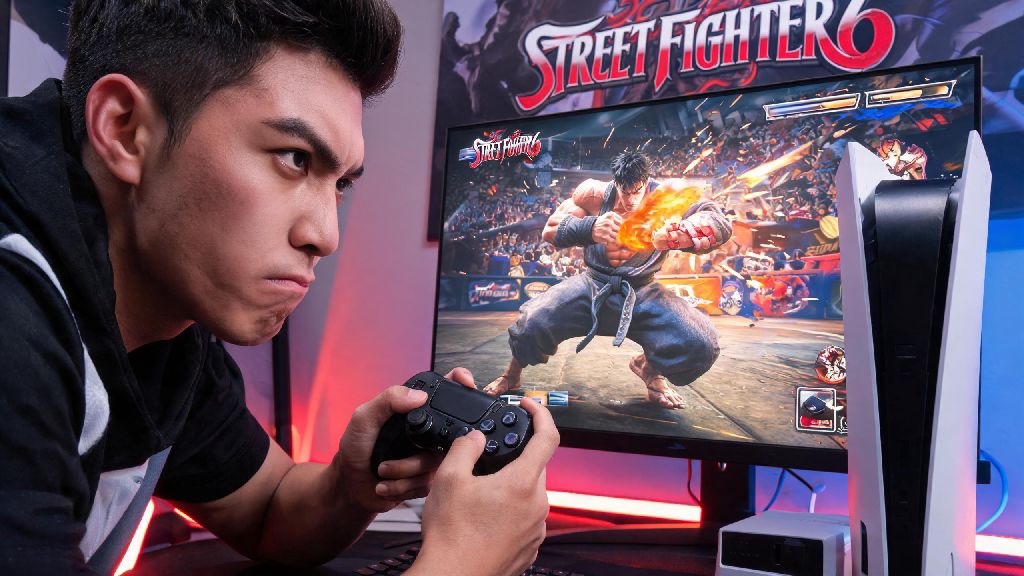
If you’ve spent even a few hours playing Street Fighter 6, you’ve probably had the frustrating experience of getting rolled by an opponent spamming jump kicks or standing heavy punches. Most new players write these losses off as them being bad at the game, but 90% of the time the fix is way simpler than you think. Learning how to crouch block in Street Fighter 6 is the first core defensive skill every player should master, and it will immediately cut your loss rate in half if you’re just starting out. I still remember my first 10 hours with the game, where I lost 8 out of every 10 matches just because I couldn’t get blocking right, so don’t feel embarrassed if this is a skill you’re still working on.
How to Crouch Block in Street Fighter 6: Step-by-Step Basic Controls
The actual input for crouch block is extremely simple, but there are a few small details that trip up new players all the time. For controller users, you just need to hold down + back relative to your opponent, not relative to the screen. That means if you’re on the right side of the screen facing left, you’ll hold down + right, not down + left, to block. For keyboard users, the input follows the same rule: hold the down key plus the direction that moves you away from your opponent, regardless of your default control setup.
One common mistake here is only holding down, not down + back. A lot of new players see an attack coming, jam the down key, and still get hit because they forgot to add the back direction to activate the block. You also don’t need to press the input quickly or repeatedly; holding it down smoothly for the entire duration of the attack is all you need.
If you want to build muscle memory fast, head to training mode, set the dummy to spam jump heavy kick on repeat, and practice holding crouch block for 10 full rounds without getting hit. This takes less than 10 minutes, and you’ll walk away with the input locked in for your next real match.
Key Situations Where Crouch Block Shines (And When to Avoid It)
Crouch block is not a universal defensive tool, but it works for the vast majority of common pressure scenarios you’ll run into in casual and ranked play. First, it’s important to know what it actually blocks: all mid and high attacks, including airborne attacks like jump kicks, jump punches, and diving special moves. The only two things that will get through crouch block are low attacks (like crouching light kicks or sweeps) and standard throws.
That makes crouch block the perfect default defensive option in most neutral situations, especially when you’re still learning to read opponent patterns. There are four specific scenarios where I always reach for crouch block first:
You do need to be careful with crouch block in a few situations, though. If you’re standing right next to your opponent, they can throw you for free if you’re holding crouch block the entire time, since blocks don’t stop throws. You also want to avoid crouch block if you notice your opponent is spamming a lot of low attacks, as those will go right under your block and trip you for big damage.
Crouch block takes way less mental energy than parrying or counter-poking if you’re still learning the game, so don’t feel like you have to use flashier defensive options to be good. Even top pro players use crouch block as their default around 60% of the time, because it’s reliable and lets you save your focus for reading opponent patterns instead of nailing perfect inputs.
Common Crouch Block Mistakes New Players Make (And How to Fix Them)
Even though crouch block is a simple mechanic, I see the same 4 mistakes over and over again from new players, and all of them are easy to fix with a little intentional practice. The first mistake is dropping block too early. A lot of players release their block input a split second before they think the opponent’s combo is over, only to get hit by the final heavy attack in the string. The fix here is simple: wait half a second after you think the combo ends before you press any attack buttons. Most combos have a small recovery window after the final hit, so you won’t lose any advantage by waiting an extra split second.
The second mistake is crouch blocking while you’re in throw range. If you’re standing within two character lengths of your opponent, they can hit you with a throw whenever you’re holding block, no questions asked. Learn the throw range for your main character in training mode, and if you’re inside that range, alternate between crouch block, quick jab, and throw tech to keep your opponent guessing.
Third, a lot of players forget to switch to stand block when they see a low attack coming. If you notice your opponent ducking right before they press an attack button, that’s almost always a low sweep or crouching light kick, so you’ll need to let go of the down direction and just hold back to block it. I used to lose entire sets against Ryu players who mixed jump kicks and low sweeps, until I spent 15 minutes in training mode practicing switching between crouch and stand block on command.
The final mistake is overusing crouch block when you have Drive Gauge available. Crouch block is great, but if you have half a bar of Drive Gauge left, you can parry a heavy attack to get frame advantage and turn defense into offense. Don’t rely on crouch block so much that you forget to practice your other defensive tools.
How to Combine Crouch Block With Other Defensive Mechanics
Crouch block works best when you mix it with other defensive tools in SF6, to keep your opponent from figuring out your patterns and exploiting them. The easiest combination is crouch block plus Drive Parry. You can switch from crouch block to Drive Parry instantly by pressing the parry button, no need to release the block first, which is a hidden tip most new players don’t know. If you’ve blocked two or three hits of a combo with crouch block, you can parry the next hit to get frame advantage and hit your opponent with a counter combo before they can recover.
Another great combination is crouch block plus Drive Reversal. If you’re getting pressured nonstop and can’t find an opening to attack, you can use Drive Reversal while holding crouch block to push your opponent across the screen and give yourself space to breathe. This costs one bar of Drive Gauge, but it’s worth it to get out of a sticky situation where you’re one hit away from being knocked out.
You can also use crouch block to set up counter pokes. Most characters have a 3 or 4 frame crouching light attack that comes out extremely fast. After you block a mid attack with crouch block, you can throw out this quick light attack to interrupt your opponent’s next move before it comes out. This works especially well against opponents who like to press buttons nonstop without leaving gaps between their attacks.
You don’t have to stick to one pattern, either. Mixing 2-3 crouch blocks with a parry, a throw tech, and a counter poke will make you almost impossible to pressure, even against players with way more hours in the game than you.
At the end of the day, fighting games are all about building good habits one step at a time. You don’t need to master every mechanic in your first week, but taking the time to get comfortable with how to crouch block in Street Fighter 6 will immediately cut down on the number of unneeded losses you take. Even pro players use crouch block as their default defensive option most of the time, so don’t feel like it’s a “noob” move. Spend 10 minutes in training mode practicing it today, and you’ll notice a huge difference in your next set of matches.