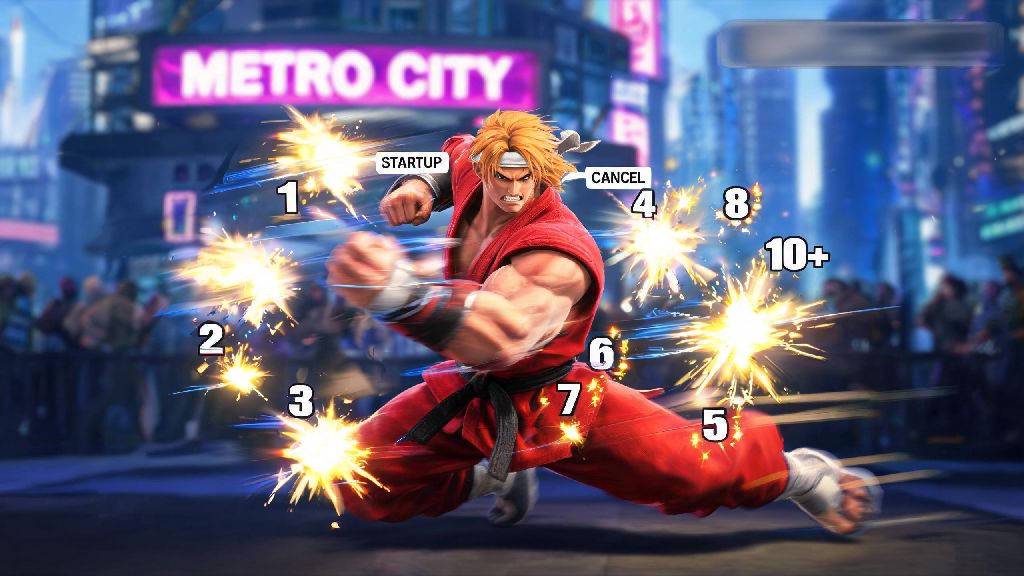
If you’ve spent any time playing Street Fighter 6 in 2026, you’ve definitely watched pro players pull off insane, 10+ hit combos that leave you wondering how they’re chaining moves together so seamlessly. The secret almost always ties back to knowing how to cancel attacks in street fighter 6, a core mechanic that turns basic, single hits into high-damage sequences that can turn the tide of any round in seconds. I’ve been competing in local SF6 tournaments since last year, and I still see even intermediate players skip over mastering cancels because they think it’s too complicated. It’s not, as long as you break it down step by step, and practice with the right drills.
What Exactly Happens When You Cancel Attacks in Street Fighter 6?
Every attack in SF6 has three distinct phases that most new players don’t ever stop to look at. First are startup frames, the tiny window between you pressing a button and your attack becoming able to hit an opponent. Next are active frames, the short period where your attack will deal damage if it connects. Last are recovery frames, the stretch of time after your attack hits or misses where your character is stuck in animation and can’t input any new moves.
Canceling lets you skip that entire recovery phase entirely, so you can input your next move before your opponent has time to block, dodge, or punish you. For example, Ryu’s crouching medium kick has 12 recovery frames after it hits. If you cancel that kick into a hadouken, you skip all 12 of those frames, so the fireball comes out instantly instead of waiting for Ryu to stand back up. When you’re first learning how to cancel attacks in Street Fighter 6, don’t jump straight into advanced combinations, start with understanding these basic frame rules first, it makes every part of the process easier.
4 Common Cancel Types You’ll Use in Every 2026 SF6 Match
Not all cancels work the same way, and each has a specific use case depending on your situation, how much bar you have built up, and what character you’re playing. These are the four most common types you’ll use regularly, from casual casual matches to high-stakes tournament play:
Special cancels have the most forgiving input window, usually 2 to 3 frames wide, so they’re the best place to start your practice. Super cancels have a slightly tighter 1 to 2 frame window, but you can make them easier by buffering the super input during the active frames of your special move, instead of waiting for the special to connect. Drive rush and parry cancels are better to work on once you have basic cancels down pat, since their timing is far less forgiving.
Step-by-Step Drills to Practice Cancels Consistently in 2026
The biggest mistake new players make with cancels is trying to pull them off in real ranked matches before they’ve built up muscle memory. You’re far better off spending 10 to 15 minutes a day in training mode with targeted drills, and you’ll see progress way faster than if you try to learn on the fly against real opponents.
Start with the most basic drill first: Pick Ryu or Luke, two characters with very forgiving cancel windows, and set the training dummy to stand still. Input crouching medium kick, then immediately input the quarter circle forward + punch for a hadouken. Do this 20 times in a row without missing, then switch to standing medium kick into hadouken, then light punch into hadouken. Once you can do all three of those consistently, move to super cancels: Input crouching medium kick into hadouken, then immediately input two quarter circles forward + punch for a level 3 super, and repeat 20 times in a row.
Turn on the cancel window display added in the 2026 winter SF6 update if you’re struggling with timing. It highlights the exact frames you can input a cancel during each attack, and it cuts your learning time by almost half, according to tests from the competitive SF6 community. Once you have basic cancels down, move to drive rush cancel drills: Input crouching medium kick, then immediately press forward forward + medium punch to drive rush into another medium kick, then cancel that into a hadouken. Do this 10 times in a row, and you’ll be ready to start testing it in real matches.
Common Cancel Mistakes to Avoid for 2026 Ranked Play
Even if you have perfect cancel timing, you can still cost yourself ranked points or tournament sets if you use cancels in the wrong situations. These are the three most common mistakes I see players make every week at local 2026 SF6 events, and they’re all easy to fix once you know what to look for.
The first and most costly mistake is canceling on block. If you cancel a normal attack into a special move when your opponent blocked the normal, 90% of special moves are minus on block, which means your opponent can punish you before you recover. Only cancel when you confirm your hit landed first, a skill called hit confirming that pairs directly with canceling. To practice this, set your training dummy to randomly block and stand still, and only cancel your attack if you see it connect with the dummy, not when you just press the button.
Second, don’t waste drive gauge on unnecessary drive rush cancels when you’re already low on drive bar. If you burn out your drive gauge entirely, you’re stuck with no defensive options for 10 full seconds, and good players will punish that hard. I saw a player lose a 2026 local grand finals set last month because he burned his last bar of drive on a completely unnecessary cancel, got drive rushed by his opponent, and lost the round when he could have finished the match with a basic special cancel.
Third, don’t overcomplicate things. You don’t need to cancel every single hit into a level 3 super to win matches. Most of the time, a basic special cancel will deal more than enough damage, and you’ll save your super bar for situations where you really need it. It’s far better to land a simple, consistent combo 100% of the time than to miss a flashy advanced cancel half the time.
At the end of the day, mastering how to cancel attacks in street fighter 6 isn’t about being a pro player with lightning fast reflexes, it’s about building muscle memory one small drill at a time. Even if you only spend 10 minutes a day in training mode working on your cancel timing, you’ll start seeing noticeable improvements in your combo damage and win rate within a couple of weeks. Don’t get discouraged if you miss inputs at first, every player goes through that learning curve, and the payoff of pulling off your first full drive rush extended combo is well worth the effort.