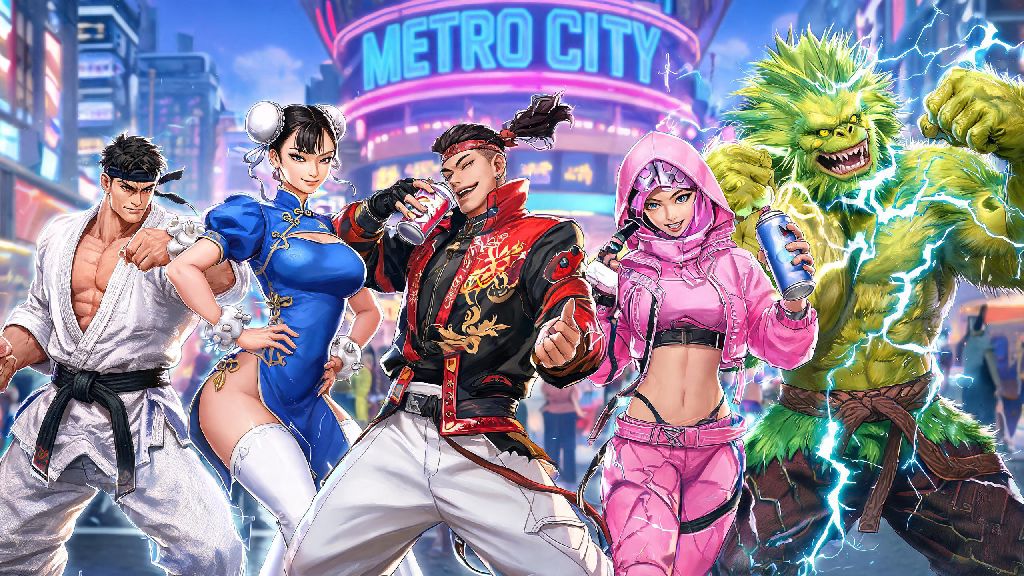
Street Fighter 6 is packed with personality, from the over-the-top level 3 super cutscenes to the little pre-match banter between rivals. If you’ve ever wanted to lean into that personality, learning how to do taunts in Street Fighter 6 is a simple skill that adds a ton of fun to every match. Taunts aren’t just for trolling, either — some characters get actual mechanical benefits from using them, and they’re a great way to celebrate a big win with friends without crossing into toxic territory. This guide covers everything you need to know, from basic inputs to hidden perks you probably didn’t know existed.
How to Do Taunts in Street Fighter 6: Basic Controls for Every Platform
The first thing to know when learning how to do taunts in Street Fighter 6 is that the default input works across every character, no matter who you main. The standard input for a neutral taunt is pressing all three punch buttons (Light + Medium + Heavy) at the exact same time. If you hold forward or back on the directional pad or stick while pressing those buttons, you’ll trigger one of your character’s two other taunt variants, each with their own unique animation.
If you play on keyboard, figuring out how to do taunts in Street Fighter 6 can feel extra frustrating, since pressing three separate punch keys at once often leads to input errors. That’s where custom input remapping comes in. You can assign taunt to a single unused key or mouse button in the settings menu, which eliminates the risk of fumbling the input when you’re trying to use it mid-set. The same goes for controller and fight stick players — most modern controllers have extra back buttons you can assign to taunt, so you don’t have to stretch your fingers to hit three punches at once.
You can test all your character’s taunts in training mode at any time. Just open the move list, navigate to the taunts section, and you’ll see a full breakdown of each input and animation. This is also a great way to see how long each taunt lasts, so you know how much of a window you have to use it without getting punished.
Hidden and Character-Specific Taunt Variants You Might Have Missed
As you get more comfortable with how to do taunts in Street Fighter 6, you’ll start to notice that not all taunts work the same way. Most characters have three standard taunts, but some have special variants that only trigger under specific conditions, or even give you small in-game perks when you use them. Some of these perks are subtle, but they can give you a tiny edge in competitive matches if you know how to use them right.
A handful of characters even have taunts that directly impact their core mechanics, rather than just being a fun animation. Some of the most useful character-specific taunt perks include:
You don’t have to pay real money for any taunts, either. Every single taunt in the game is earnable through regular play, so you don’t have to worry about missing out on fun cosmetics if you don’t want to spend extra cash.
When to Use Taunts (And When to Definitely Avoid Them)
Knowing how to do taunts in Street Fighter 6 is only half the battle; you also need to know when it’s appropriate to use them. There’s a big difference between playful teasing and toxic behavior, and crossing that line can ruin the game for other players, especially new ones who are still learning the ropes.
Taunts are totally fine to use if you’re playing casual matches with friends, or if you’re in a set where the opponent has taunted you first. The safest time to use a taunt is right after you land a KO, when the opponent is already down and can’t hit you back. You usually have a 2-3 second window before the next round starts, which is more than enough time to pull off a quick taunt to celebrate a big win. If you’re playing in a tournament and you’ve already secured the set win with a final KO, a quick taunt is a fun way to celebrate with the crowd without being disrespectful.
There are plenty of times you should never use a taunt, though. First, never taunt mid-round when the opponent is still alive. All taunts have taunt recovery frames that last between 40 and 60 frames, which is more than enough time for an opponent to drive rush across the screen and hit you with a full combo. I’ve lost more than one casual match because I got cocky after a perfect parry and tried to taunt, only to get hit with a level 2 super out of nowhere. You also shouldn’t taunt after every round against a player who is clearly new to the game — it comes off as rude, and it might make them quit playing entirely. Spamming taunts over and over is also against the game’s code of conduct, and you can get temporary chat or match bans if enough players report you for toxic behavior.
Common Taunt Mistakes and Fixes for New Players
Most new players run into the same small issues when they first start learning how to do taunts in Street Fighter 6, and all of them have easy fixes. You don’t have to be a pro player to pull off taunts consistently, you just need to adjust a few settings and learn a couple of basic rules.
The most common mistake is fumbling the multi-button input, especially if you’re playing on keyboard or a controller with small buttons. The fix here is simple: just remap taunt to a single unused button. Most players assign it to the touchpad on PS5 controllers, the view button on Xbox controllers, or a random unused key like Insert or End on keyboard. A single-button taunt remap eliminates 99% of input errors, so you never accidentally throw a punch when you meant to taunt, or vice versa.
Another common mistake is not checking if your main character’s taunt has a hidden perk. You can find all this information in the training mode move list, which breaks down every move’s properties, including taunts. If you main Jamie or Manon, for example, using their taunts at the right time can give you a real competitive edge, not just a fun animation. It only takes a minute to check the move list, so it’s well worth the time if you play a character with taunt perks.
The last big mistake is using taunts to make other players feel bad. Street Fighter is a competitive game, but it’s also supposed to be fun for everyone. If you’re playing against someone who is clearly less experienced than you, there’s no need to rub your wins in with constant taunts. Save the taunts for close matches against players of your skill level, or for casual sets with friends who are okay with playful teasing. It makes the game more fun for everyone, including you.
Now that you know how to do taunts in Street Fighter 6, from basic inputs to hidden character perks, you can add a little extra flair to your matches without risking unnecessary losses. Taunts are one of the small details that make Street Fighter feel so unique, and using them responsibly makes every set feel more personal and fun. Next time you land a clean level 3 super to close out a tight set, feel free to throw in your main’s signature taunt to celebrate — just don’t be surprised if your opponent does the same to you when they win the next round.